January Health Message: Kidney Stone Prevention and Management
Kidney stones are one of the most common urinary tract conditions, affecting millions of people each year. Although they can occur at any time, the start of a new year is an ideal moment to focus on prevention, early recognition, and long‑term management.
At YUA Clinic, our goal is to help patients understand how kidney stones form, what symptoms to watch for, and how modern treatment options and lifestyle habits can significantly reduce the risk of recurrence.
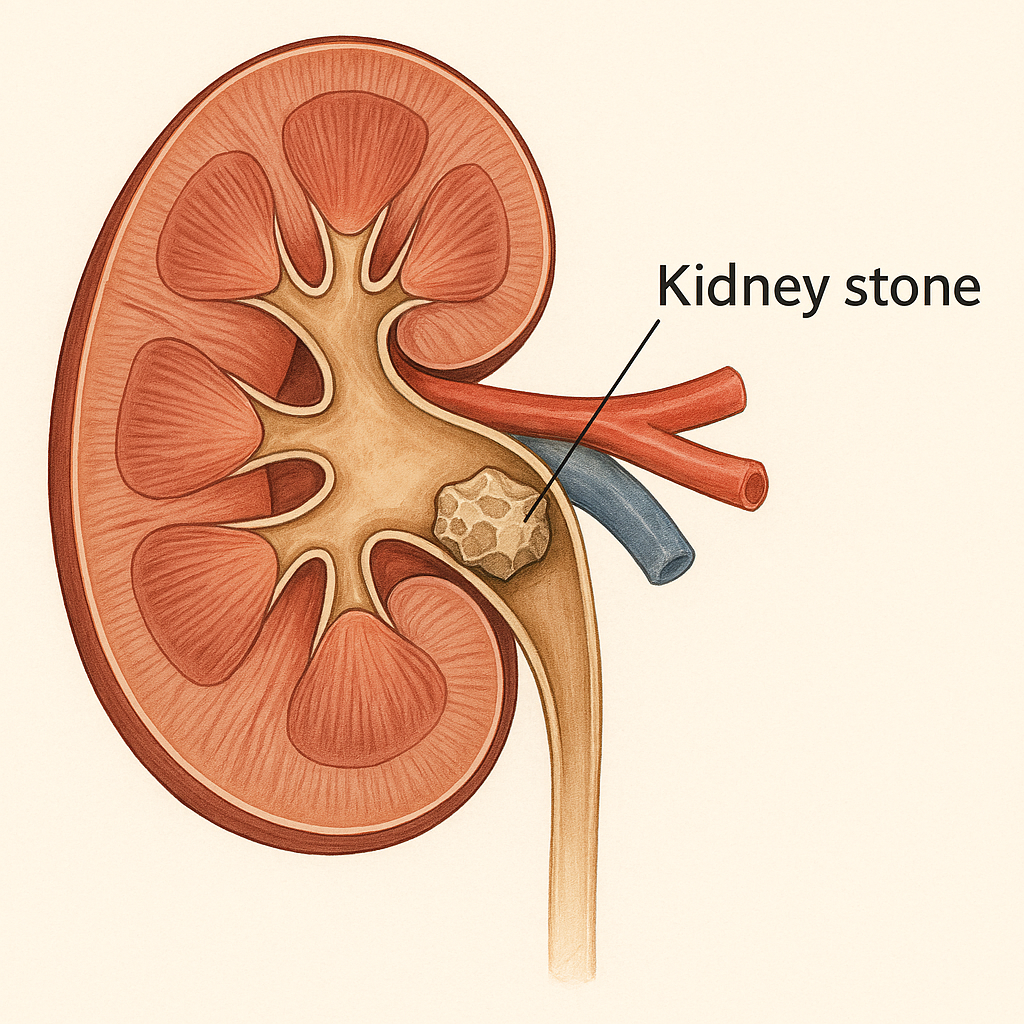
What Are Kidney Stones?
Kidney stones are hard, crystal-like deposits that form inside the kidneys when certain minerals and salts in the urine become too concentrated. These stones can vary in size—from a grain of sand to several centimeters—and may remain in the kidney or travel through the urinary tract.
While small stones may pass on their own, larger stones can cause significant pain and require medical intervention.
Understanding Risk Factors
1. Dehydration
Low fluid intake is one of the strongest contributors to stone formation. When the body is dehydrated, urine becomes more concentrated, allowing minerals to crystallize.
2. Dietary Habits
Certain foods can increase the risk of stone formation, including:
High‑sodium foods
Excessive animal protein
Foods high in oxalates (such as spinach, nuts, and chocolate)
Sugary beverages, especially those containing high fructose corn syrup
3. Family or Personal History
Individuals with a family history of kidney stones or those who have had stones before are more likely to develop them again.
4. Medical Conditions
Some health conditions can increase stone risk, including:
Gout
Hyperparathyroidism
Recurrent urinary tract infections
Digestive conditions that affect nutrient absorption
5. Certain Medications or Supplements
Some medications and high doses of supplements—such as vitamin C or calcium supplements—may contribute to stone formation in some individuals.

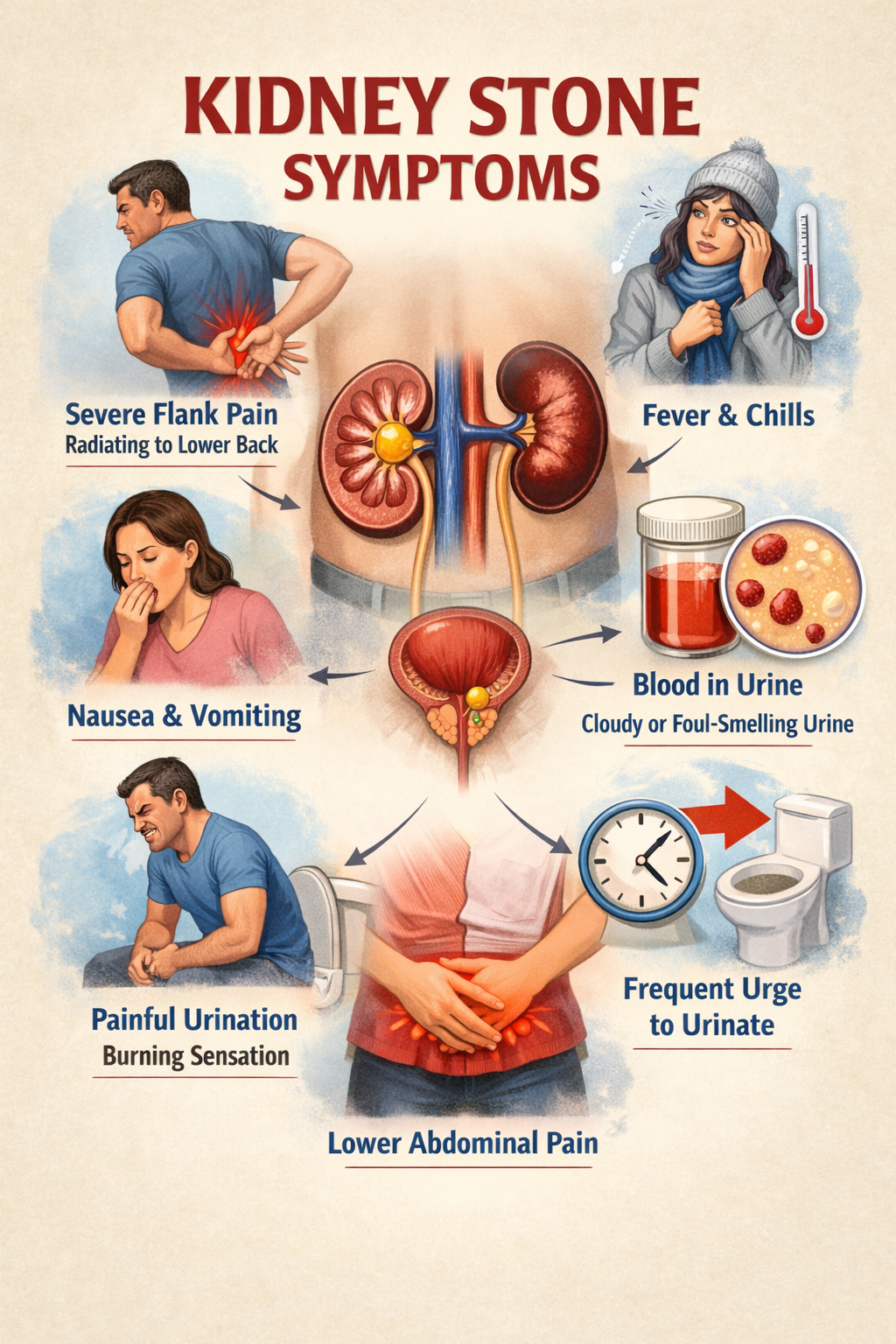
Recognizing Symptoms of Kidney Stones
Symptoms can vary depending on the size and location of the stone. Common signs include:
1. Severe Pain
Often described as sharp, cramping pain in the back or side, radiating to the lower abdomen or groin. Pain may come in waves.
2. Blood in the Urine
Urine may appear pink, red, or brown.
3. Frequent Urination or Urgency
A persistent need to urinate, even if only small amounts are passed.
4. Painful Urination
A burning sensation when urinating.
5. Nausea or Vomiting
These symptoms often accompany severe pain.
6. Cloudy or Foul-Smelling Urine
This may indicate infection along with the stone.
Anyone experiencing severe pain, fever, chills, or difficulty urinating should seek medical attention promptly.
Lifestyle Tips to Reduce Recurrence
Kidney stones often recur, but many cases can be prevented with consistent lifestyle habits. Here are evidence‑based strategies to lower the risk:
1. Stay Well Hydrated
Aim for pale yellow urine throughout the day. Water is the best choice, but citrus beverages like lemonade may also help reduce stone formation.
2. Reduce Sodium Intake
High sodium levels increase calcium in the urine, which can contribute to stone formation. Limiting processed foods and restaurant meals can help.
3. Balance Calcium Intake
Calcium from food sources is important and may actually help prevent stones. However, supplements should be discussed with a healthcare provider.
4. Moderate Animal Protein
High intake of red meat, poultry, and seafood can increase stone‑forming substances in the urine.
5. Follow Up with Your Healthcare Provider
Regular check‑ins allow for monitoring, early detection, and personalized prevention plans.

YUA Is Here For You
At YUA Clinic, we are dedicated to supporting our community with education, prevention strategies, and access to modern urologic care. Kidney stones can be painful and disruptive, but with the right knowledge and lifestyle habits, many cases can be prevented or managed effectively.
If you have concerns about kidney stones, symptoms, or prevention strategies, our team is here to help guide you with compassionate, evidence‑based care.